PWM (Pulse Width Modulation) and DAC (Digital to Analog Conversion)
Videos 14 and 15 covered sinewave generation and DAC.
We mainly used the sinewaves to create smooth transitions in our LED outputs, but I could definitely see the application in other analog signals such as audio signals.
The first video and the first half of the second video were fairly straightforward. I couldn’t record any of my own output because I don’t have an oscillator yet, but I was able to debug the code and it seemed to run pretty well.
My problems began when we tried to utilize the CMSIS-DSP library, to optimize the code calculating the cos/sin functions (using the ARM libraries), to use the function:
arm_cos_f32()
Lars didn’t go through the full details of how he got the library set up, so I had to resort to other tutorials.
I eventually got it working using this video: by a channel called Easier in Practice
I’ll highlight the important bits here for anyone else using a similar board to me (an STM32 Nucleo F767ZI).
Firstly, the import statement is:
#include "arm_math.h"
Don’t make a mistake like me and use the angle brackets instead of the quotes. Remember the angle brackets are for built-in libraries and the quotes are for user(local) libraries.
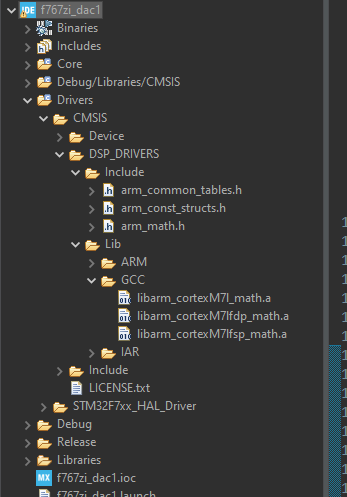
These were the files that I ended up importing into my project:
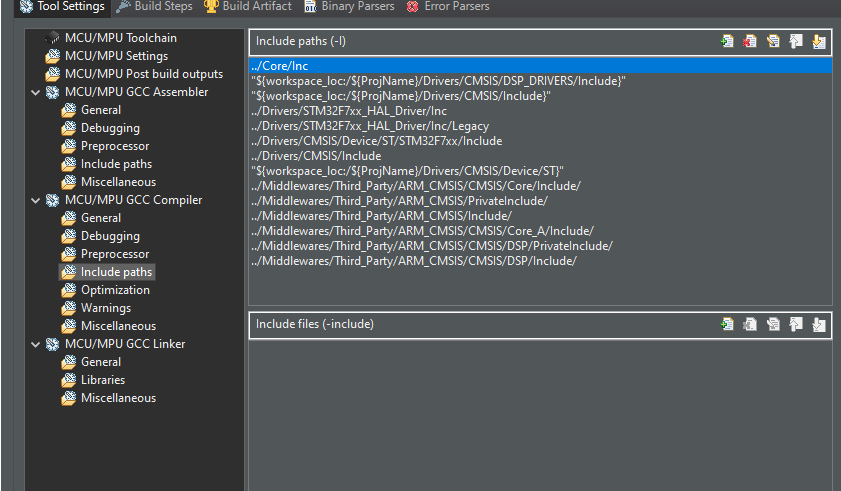
And these were the strings that I added for my compiler and linker:
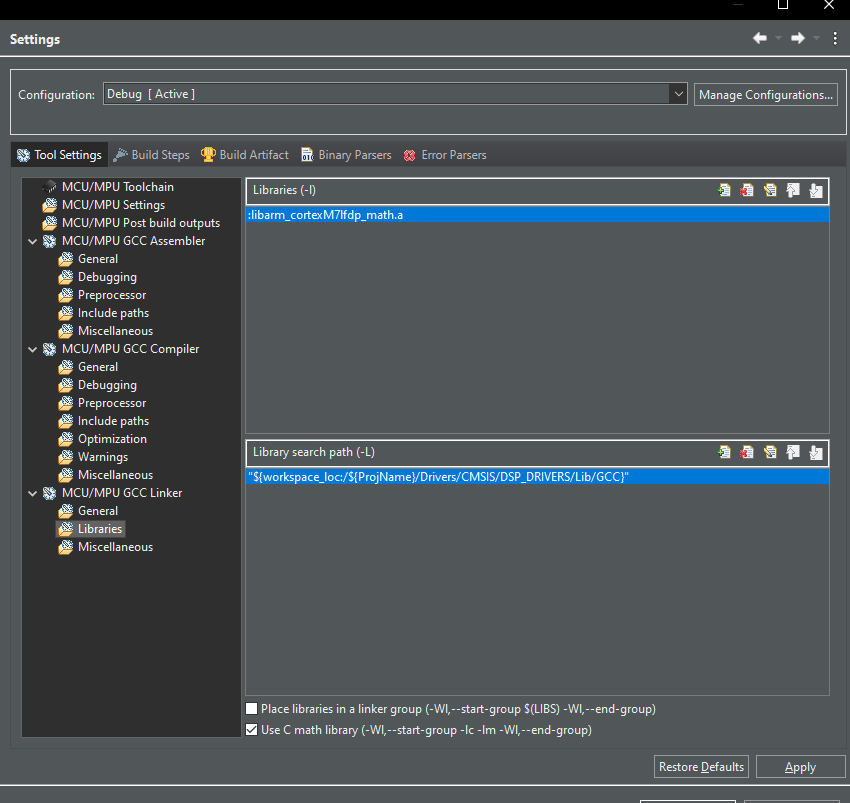
I can’t tell you how happy I was when I finally got this to work. I’m sure this will be an important library when I have to do more complex signal processing in the future, so I really invested a ton of hours into it.
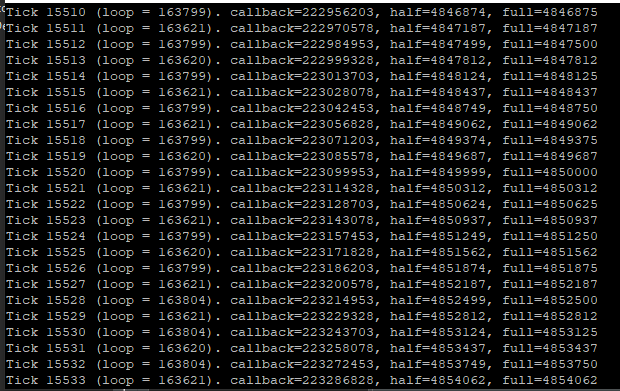
At the end, I got my signal to run at around 15 kHZ. By the time I’m ready to actually use this, I should have an external oscillator and an oscilloscope to test, so I’ll probably be able to run at a higher frequency.