
Trinistocks
When COVID-19 came around, I had just started a new job at Digicel Trinidad & Tobago.

I was working hard to learn the new job, but I also had some extra time at home.
I decided that I was going to use the time to learn something new. The first thing that I could think of was re-learning programming. I had some previous history in software using languages such as C++, C# and Java for some previous projects (including TINQA, my undergrad project), but I had stopped programming for a few years since I had originally decided to work in networking. Since I knew that most people in the networking industry were using Python, I decided to continue my programming career by learning Python.

Around the same time, I had just started investing in T&T’s local stock market (the TTSE). I was pretty excited about that, but I was always disappointed whenever I visited the website of the stock exchange.
Back then, it was a pretty ancient site, and it was always slow. I thought I could solve two problems at once by learning Django/Python, and developing a better website at the same time!
I started by collecting data and building the database. I initially used the requests library in Python to navigate to each page that I wanted in the TTSE. However, this was really slow, and the site admins were starting to set up firewalls for web scraping bots like mine 😁
Someone on LinkedIn eventually showed me that a lot of the historic stock data was actually stored in the javascript charts displayed on the website, so I used those to get a large dump of all the data.

I imported the data as a CSV to my Postgres SQL database.
I then started to learn the Django ORM, which is still (imo) the best part of the Django library.
The basic Model/View/Controller (MVC) was pretty easy to understand, and I had a basic version of the website up and running relatively quickly.
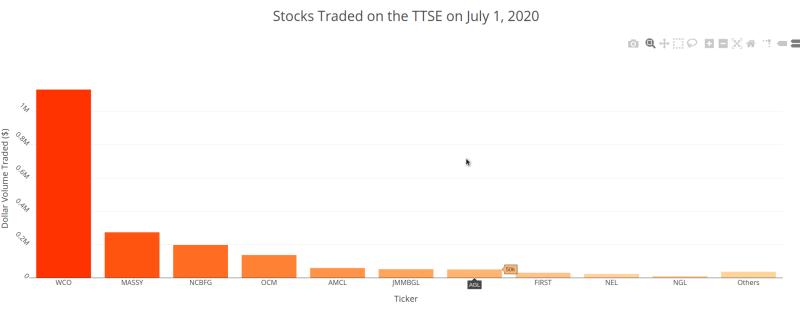
From there, I started to think about access. Most people that I knew used their phone to access the web. Few of them used their laptop browser.
I therefore started to look at mobile development frameworks. Flutter emerged as a really strong contender for cross-platform development.
I also needed to open up an API to allow my flutter app to fetch the data that it needed. Luckily, developing a REST framework in Django was pretty easy.
I ended up adding a ton of functionality from there: A portfolio tracking tool, to keep track of how much my shares were worth. A simulator game, so that you could test your mettle without spending real money. etc.
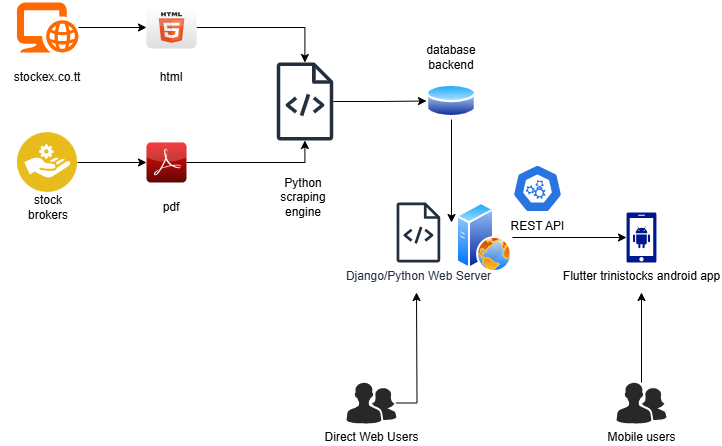
However, the largest headache was always scraping the latest data from the source. I ended up using a PDF scraping library to fetch the data from some other local stockbrokers.
Here’s a diagram of the architecture:
I eventually retired the website and the app, to focus more on other projects. The code for both is available publicly on my Github profile below.
All in all, it was a really great learning experience! 🎉